London calling

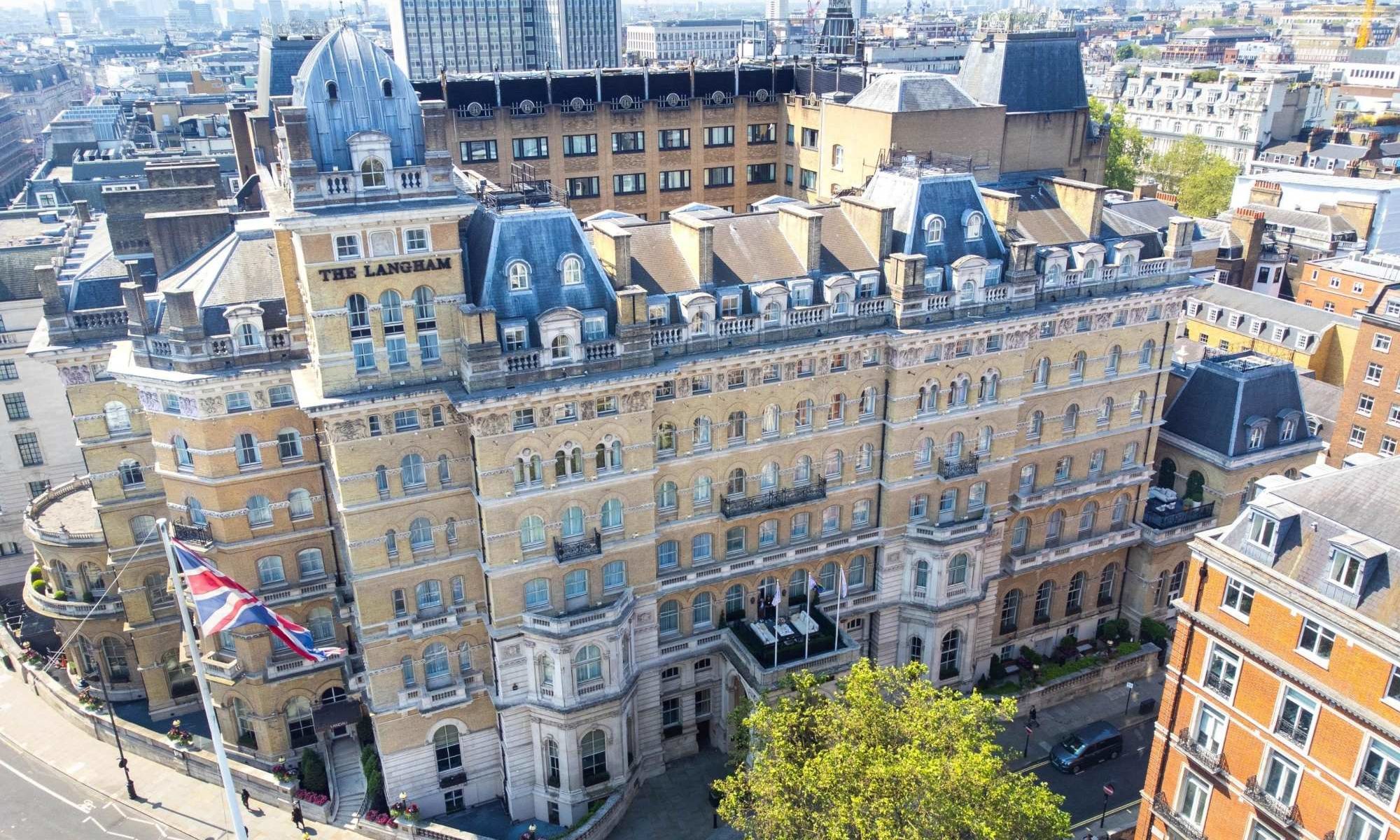
Langham Hotel


In October, I spent a lot of time in London, where I played in two consecutive tournaments…

Global Chess League

This was the second season of this 6-player team tournament organized by the Indian company Tech Mahindra. Our Mumba Masters team missed Alexander Grischuk, who was unable to obtain a visa; he was replaced by Peter Svidler. We also had a change on the Prodigy Board, with the arrival of Raunak Sadhwani. On the whole, there was a good atmosphere. These team matches are always fun, with lots of convivial moments, blitz, ping-pong sessions etc. But unfortunately we lost a lot of tense matches at the start of the competition. As a result, we were quickly eliminated from the race for the top 2 qualifying places for the Grand Final, and had no choice but to save our honor. The rhythm of play was 20+0, which is a bit weird, but increment-free is clearly coming back into fashion! On a personal note, I achieved a score of 5/10 on the Icon Board against Carlsen, Anand, Giri, Firouzja and Nakamura, each of whom I met twice.
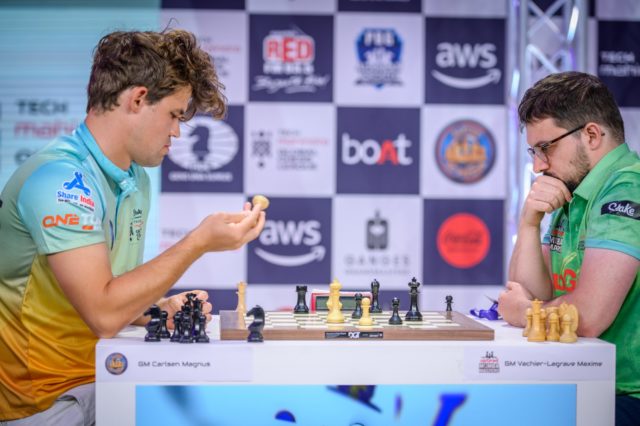

Carlsen dubitatif, et sur le point d’abandonner contre Maxime (Image : Global Chess League).
Carlsen skeptical, about to resign against Maxime (Image: Global Chess League).

Of course, I’m pleased with my 1.5-0.5 victories over the first three, in games that were rather well controlled; but a little less satisfied with my defeat to Naka, and especially with the 0-2 that Alireza inflicted on me… Indeed, it’s never pleasant to suffer two losses in positions that could easily have led to victories! It’s the difference between a decent result and a good one… From the team’s point of view, my two losses against Alireza led to match defeats, and that meant a lot in the race for the play-offs. But I also won the team some other matches 😊.

WR Chess Masters

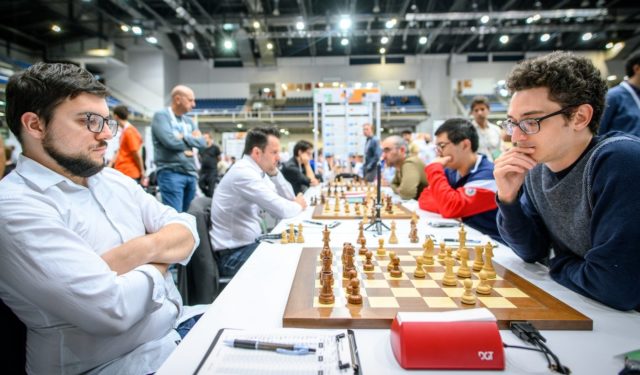
Two tube stations further, back to classical chess at the Langham Hotel, a beautiful London palace with an excellent French restaurant run by Michel Roux, the Palm Court. It’s worth noting that Alireza, never stingy with surprises, knew it from the Netflix series « Five Star Chef », which takes place precisely at the Palm Court!
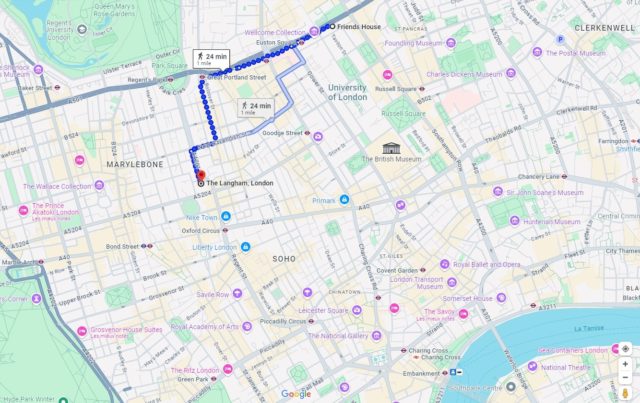
En route to the Langham Hotel !

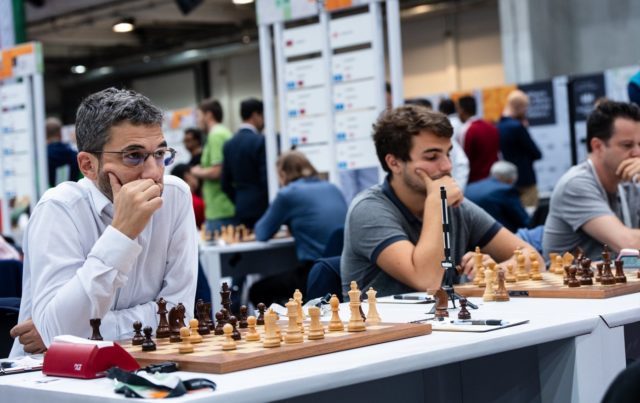
The tournament itself had an original format, which I certainly enjoyed, but was nonetheless very difficult (1h/30, 30’/20 + 30’ko). Cup format, two potentially 4-hour games per day, and a possible tie-break late in the evening! A game at 10am (that’s really early), the return match at 5pm, and the tie-break at 10pm, makes for some busy days! With games lasting up to 3 hours, we could easily start at 11am, or even noon. But 4 hours is the FIDE minimum for a classical game to be rated (for those of you wondering why we had to play at such an odd pace without increment). We had a few technical discussions beforehand, as there were quite a few issues to be addressed due to the lack of increment, notably how to deal with players flying pieces in zeitnot… I also suggested that, in those forthcoming 16-player knockout tournaments, there shouldn’t be 16 seeds, with the whole bracket determined from A to Z, but 4 seeds and a draw, as is done in tennis.

Time to play! I started the round of 16 against Sindarov, the lowest-rated player I’d played in the tournament, but who gave me a lot of trouble throughout the match (including the Armageddon!). It was a heck of a struggle. I knew it was going to be a tough match, because he is the player who knocked me out of the 2023 World Cup and who’s capable of performing at a very high level. I’m pretty pleased to have escaped unscathed!

After that, I finished my Uzbek championship against Abdusattorov 😊. In fact, I’ve played 5 games in a row against Uzbeks (including the last game of the Olympiad), and even 7 if you ake into account the first 2 Armageddon games of this tournament! I did a little better in this match, even if with black, I found myself in a bit of difficulty. But I managed to solve it like the Grünfeld acrobat that I am 😊. Let’s go straight on to the Armageddon, which was the occasion for me to play a nice game.
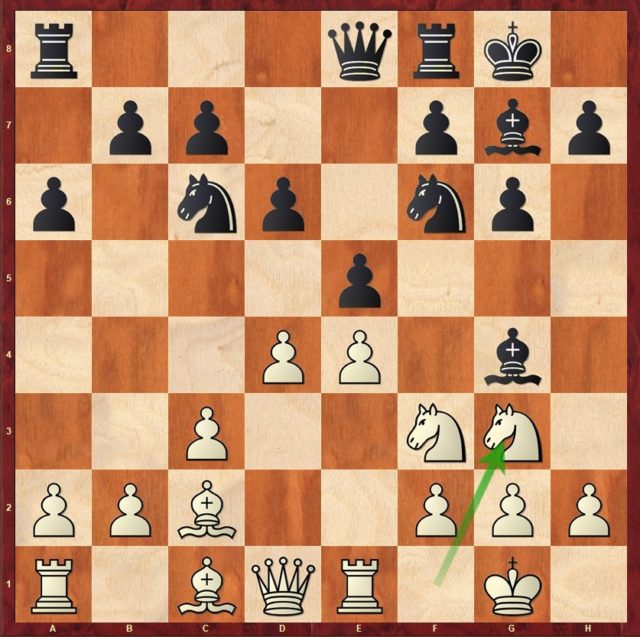

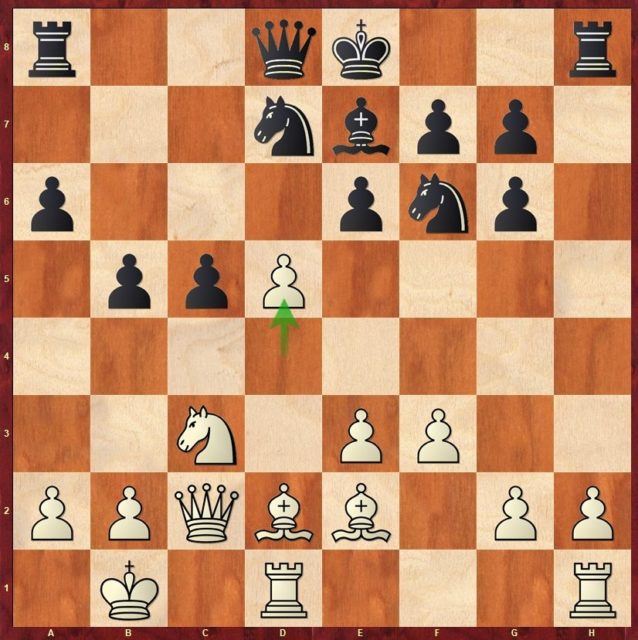
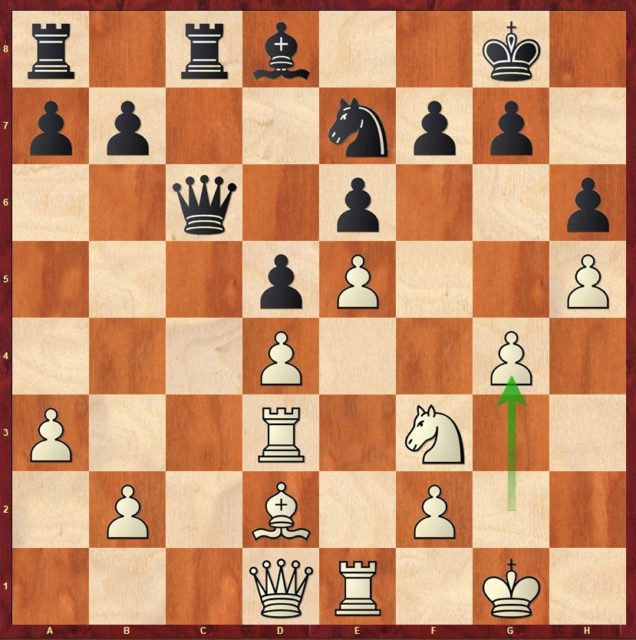
12…Nh5 is logical insofar as 12…exd4 13.cxd4 Bxf3?! 14.gxf3 was inferior, but also because if 13.Be3, there would now be 13…Bxf3 14.gxf3 Nf4 which is no good for white (since there was no exchange on d4). So I had to close the center with 13.d5, but took an edge after 13…Ne7 14.h3 Bxf3 15.Qxf3 Nxg3 16.fxg3! a typical move in this kind of position, and one that’s nice to show my dear readers 😊.

I was gradually able to improve my position, especially after 16…f5 17.g4 fxe4?! (17…fxg4 was stronger, but it wasn’t easy to see) 18.Qxe4 Kh8 19.Be3, as the Ne7 found itself really dominated in the position. After 19…c6 20.Bb3 (20.c4! was more accurate), I thought he absolutely had to take on d5, and after 20…cxd5 21.Bxd5 Nxd5 22.Qxd5, try to equalize with 22…Qb5!. 20…c5? was a strategic error, after which black is suffering. I thought I was playing on the Queenside, as you always do in these structures, but in fact I have a big advantage on the Kingside, which is paradoxical.

There was a very strong plan, which I didn’t see, to put my pawns on h4, g5 and g4, then continue with Kg2, Rh1, h5 and Bc2 and I’m the attacker on the Kingside!
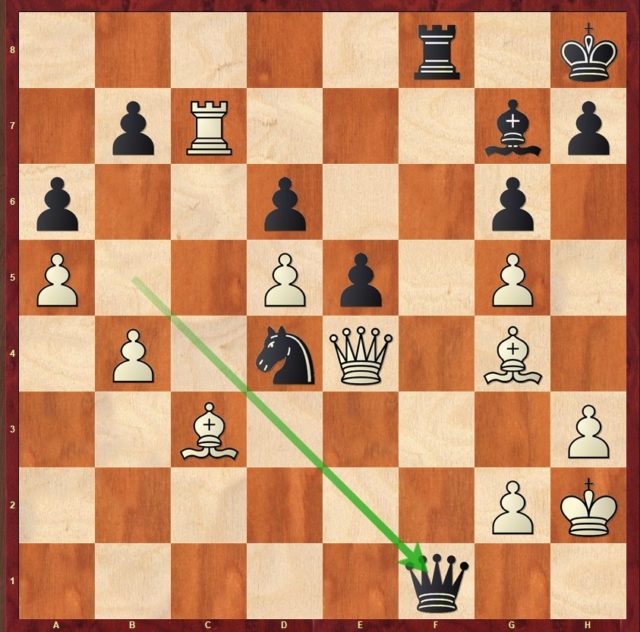

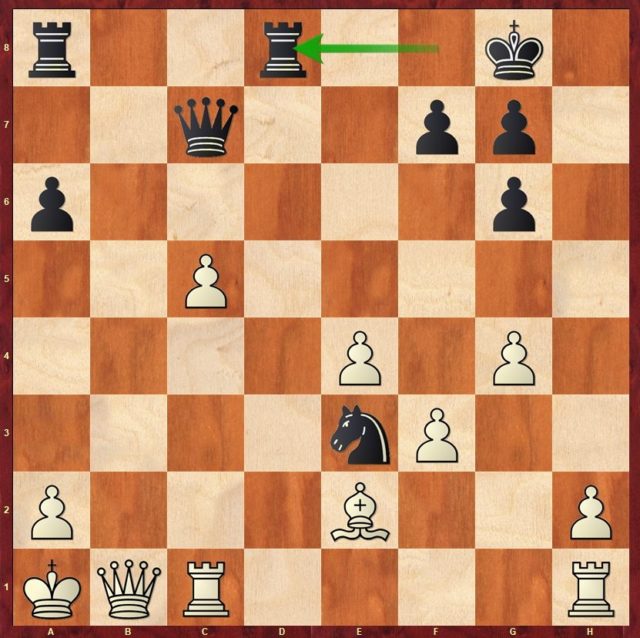
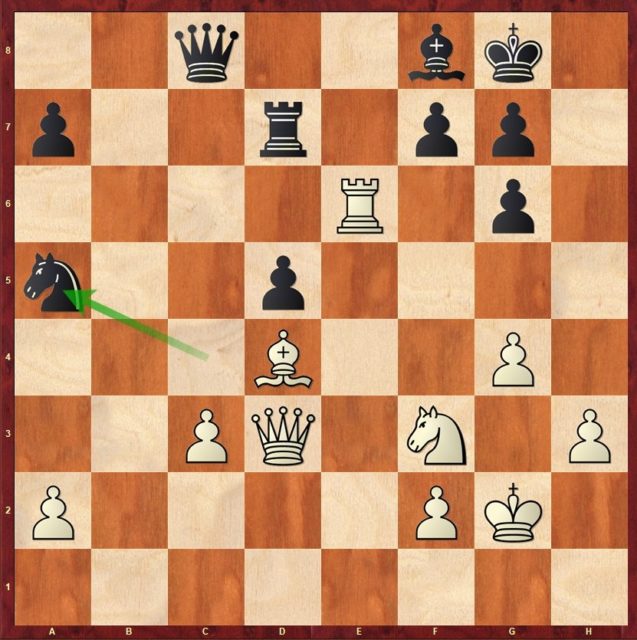
Here, I’ve kept my Queenside advantage, but there’s a move that’s very difficult to find. You have to understand that black threatens 37…h5! – to incite an en passant capture and revive its Bg7 – much more than 37…Rf4; hence 37.Bd2! with complete domination, e.g. 37…Qf2 38.Qe1!. But both Nodirbek and myself only anticipated 37.Rxb7? Rf4? while 37…h5! equalized, admittedly somewhat miraculously. White has a multitude of ways to continue attacking, but none of them is satisfactory. 38.Be6? Ne2! would really not be a good idea. 38.Qxg6 Qf4+ only gives the perpetual. 38.gxh6 Bxh6 gives access to the f4 square, and black doesn’t care about 39.Bxd4 exd4 40.Qxd4+ Rf6!. Finally, 38.Bxd4 exd4 (38…hxg4? 39.Bg1!) 39.Be2 looks strong since if 39…Be5+? 40.Dxe5; but black still has the resource 39…Qc1!, and with the threats …Be5+ or …Qxg5, the position remains very uncertain.

In the game, I concluded with 38.Rb8+ Bf8 39.Qe1 (I’d also seen the simpler 39.Rxf8+ Rxf8 40.Bxd4) 39…Qd3 40.b5! and black is caught out all over the board. In the end, it’s the whole concept that with pawns on d5 and g5, black’s position is completely paralyzed throughout the game.
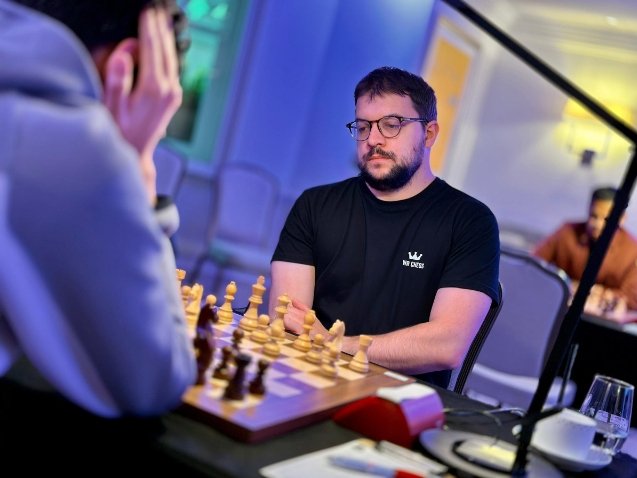
Beginning of the semi-final against Firouzja (Image: ChessBase India)

In the semi-final the following day, I was up against my compatriot Alireza (Firouzja). The first game, a Sicilian Alapine, turned out to be quite tricky, especially when I started to lose control of the position… But as we were running out of time, we were naturally led, as is often the case in this kind of situation, to variations in which all the pieces were exchanged. The game with black went well, thanks to a very good preparation that dried out the position.

On the other hand, my third Armageddon went totally out of control; it must be said that I didn’t expect Alireza to go after me in such a huge variation of the Najdorf!
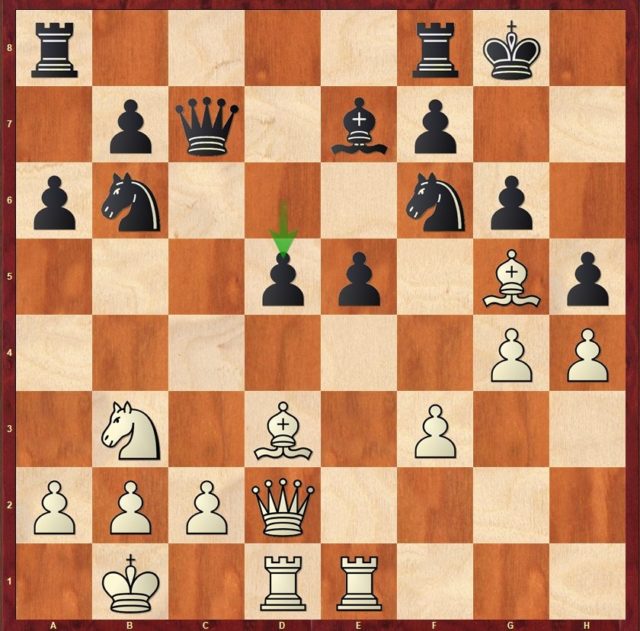

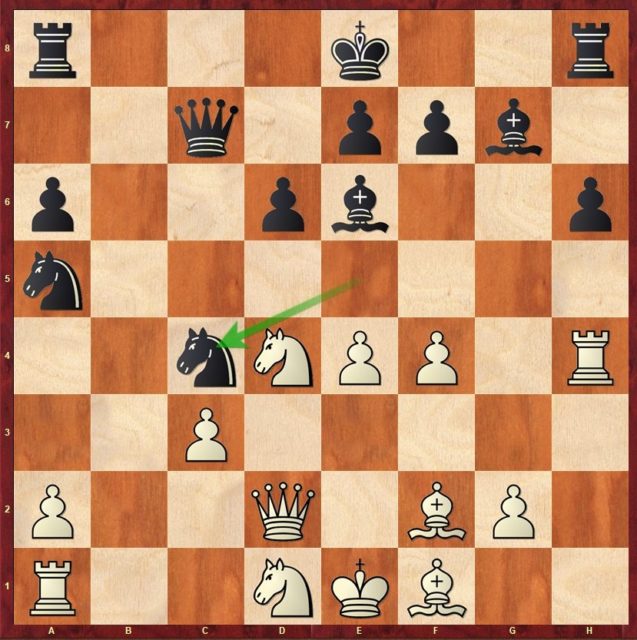
I knew I wasn’t playing my preparation exactly, but I was fairly familiar with this line where white sacrifices the d5 pawn. Here, I thought 19.Bxf6 Bxf6 20.gxh5 e4? (better is 20…Nc4) 21.fxe4 Qe5 was strong, but in fact it’s very bad because there’s 22.c3 Qxh5 23.Qf2 Nd7 24.Rh1. But he played 19.Qh2, the move I was expecting, after a very long thought. It’s « badly played » on his part, because these are positions where I’ll be able to play moves instinctively and he much less so. I played 19…Rae8?! a little too quickly because I missed
20.Qxe5 Qxe5 21.Rxe5 and if 21…hxg4? 22.Rxe7!. As a result, I was forced to play 21…Bd8
but now he has 22.Rxe8 Rxe8 23.Nc5 hxg4 24.Nxb7 and I had the choice between suffering martyrdom with 24…Be7 or giving the piece away and trying to fish in troubled waters with 24…gxf3!? 25.Nxd8 Ne4. Obviously, true to form I made the second choice, with a lonely onslaught of my f2-pawn after 26.Nc6 f2. He took quite a lot of time as everything looks winning for white, but nothing is really completely clear, which is the advantage of this kind of position. Personally, I thought the cleanest move would have been 27.Be3, but his 27.Kc1 seems logical.
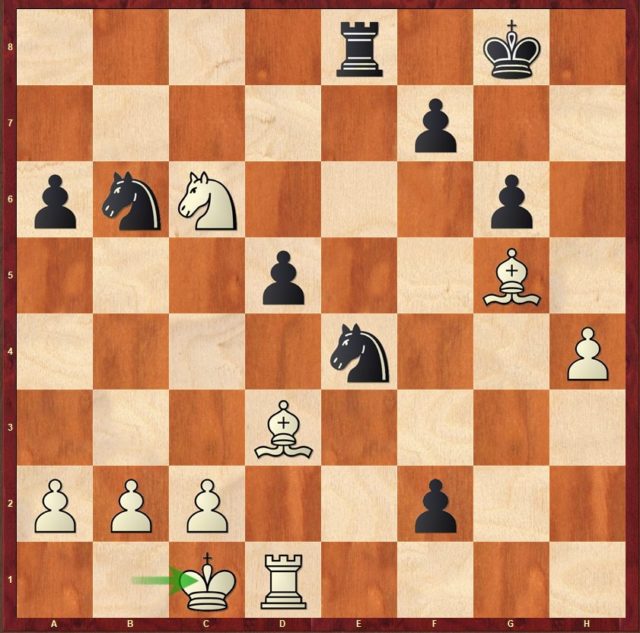

But then, as I knew he was threatening 28.Be3, I played 27…Ng3. There’s 28.Ne7+ Kg7 29.Be3 which is enough here; these are fairly simple variations, but there are so many options… He played 28.b3 and suddenly it’s a little less clear, although after 28…Re1 29.Bf4 Nf5, the simplest win was 30.Kd2 Nxh4 31.Nd4. After 30.Bd2 Rg1 there was still 31.Ne7+! Nxe7 32.Be3, but now it becomes hard to find! He played the more natural 31.Rf1 with a similar idea (if 31…Ng3 32.Be3! Nxf1 33.Bxf2!). So I replied 31…d4. There, 32.Nxd4 was still strong, and if 32…Ng3 33.Rd1. But he chose 32.Kb2 Ne3 33.Bxe3 dxe3 34.Bxa6 Nd5 35.Nd4 Nf4, which is still winning but the position gets very tricky, especially as he was starting to run out of time. After 36.c3 Nh5, he finally blundered with 37.b4?? Ng3 38.Rc1 Rxc1 and 0-1 as black’s pawn queens after 39.Kxc1 e2!. However, despite the many inaccuracies, white would have kept a winning endgame had he played 37.Nc2! Ng3 38.Nxe3 Nxf1 39.Nxf1. A big turnaround, as sometimes happens in this kind of Najdorf 😊.


Then, the final against Erigaisi, who was, and still is, in dazzling form, tickling the 2800 Elo mark. Once again, I started with white. It’s true that I perhaps didn’t reach the full potential of the positions I got in my white games, but these were all morning games 😊. What’s more, you have to be super careful because a loss is almost the same as an elimination; indeed, the only person to come back from a defeat with white was Abdusattorov against Kosteniuk in the first round, and it’s fair to say that this upset wasn’t really expected.

Against Erigaisi, I was probably a little too solid with white, but with black it went rather well. In the 6.Be2 Najdorf, I was familiar with the somewhat atypical sub-variation 6…e5 7.Nb3 Be7 8.h4 Be6 9.f4!?. I figured there were quite a few moves that had to be ok, but I wanted to try a line against which he would be less prepared, hence 9…g6!?. The debate became very tense immediately!
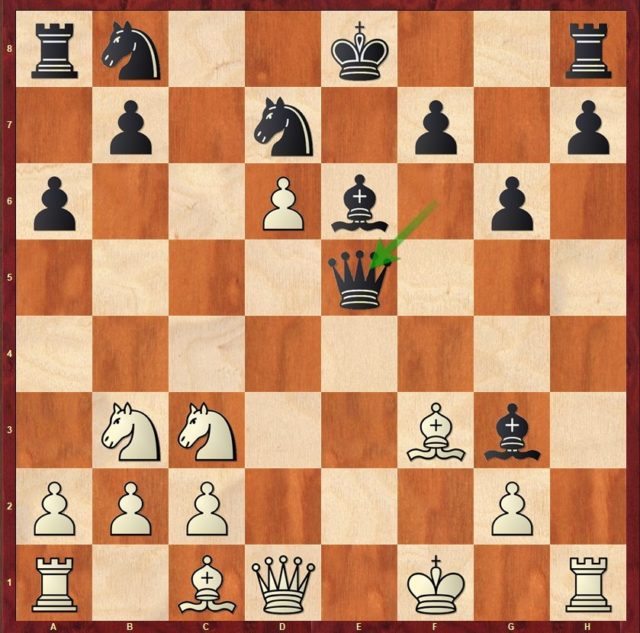

Here the best was 15.Bxb7! after which there were two possible continuations; first 15…Ra7 16.Bf3 Qxd6, which to me seemed the best, but the machine shows us that 17.Bh6! is very strong. The alternative 15…Bc4+ 16.Kg1 Bxb3 also gives white the advantage after 17.Ne4! (but not 17.axb3?? Qc5+), though it’s far from obvious at first sight. Erigaisi preferred
15.Ne4 Nc6 16.Nxg3 Qxg3 17.Bxc6 (there’s still 17.Be3!, but it’s too hard) 17…bxc6 18.Qd4
(the logical continuation) 18…f6. Just after playing this move, I realized that the spectacular 18…Bd5! might have been playable! The more I looked at the lines, the more I thought it would have been interesting since 19.Qxh8+? Nf8 didn’t work because of the double threat of …Bc4# and …Qxg2+. But my regrets were limited as I quickly understood that 19.Qe3+ was possible and that I wouldn’t have been better after the Queens exchange. After
19.Bf4 Qg4, I looked carefully at 20.Nc5. At first, I wanted 19…Bd5?!, but it’s actually not very good because of 20.Qe3+ Ne5 21.Qg3!, and the Nc5/Pd6 construction is overpowering. 19…0-0 is the safe little move I probably would have played. But he ended up playing 20.Bd2, which seemed a bit odd, I must say. After 20…Ne5, I was looking at 21.Rh4 which is the best move, but he probably didn’t want 21…Bc4+ 22.Kf2 Qe2+ 23.Kg1 Bd5, and played
21.Qxg4 Bxg4 22.Ba5. I’d seen this in advance, with the transfer of the Bishop to c7 to support the d6 pawn. If he gets the Bishop on c7 and my Rook remains on a8, it can get a bit unpleasant, hence the immediate 22…Rb8!. I thought it was starting to look good for me with the Rook coming to b5, the Nb3 being a bit dominated, and not too many possibilities to play c4…
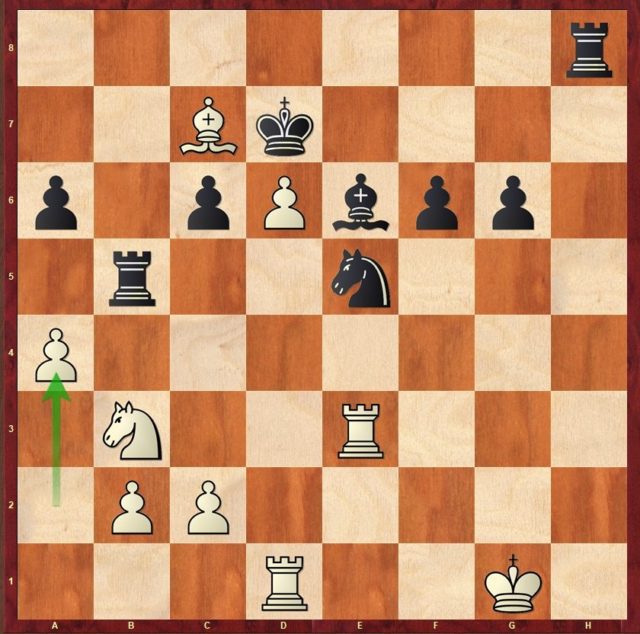

After the exchange sacrifice 30…Rxb3! 31.cxb3 Bd5! I figured it was going to be very difficult for him, but the computer is laughing 😊. And our future +2800 club member found the moves! 32.Rd4 is the easiest as it prevents 32…Nf3+ because of 33.Rxf3 Bxf3 34.Rf4 and 35.Rxf6. 32…g5 33.Rf1 Rh1+ 34.Ke2 Rh2+ 35.Kd1. Now, if 35…Rxb2, there’s 36.Rb4, or even 36.Rh3, hence 35…Bf3+ 36.Kc1 c5. Beforehand, I thought I’d be much better here, but I realized as I went along the lines that 37.Rc4! was possible (37.Rd2? Rh1+ 38.Kc2 g4! is losing). So we agreed upon a draw after 37…Nxc4 38.bxc4 Bg4. A fighting draw where we both felt we had a chance, but especially me in fact! Strangely enough, we didn’t miss a thing, it was a game of high quality.
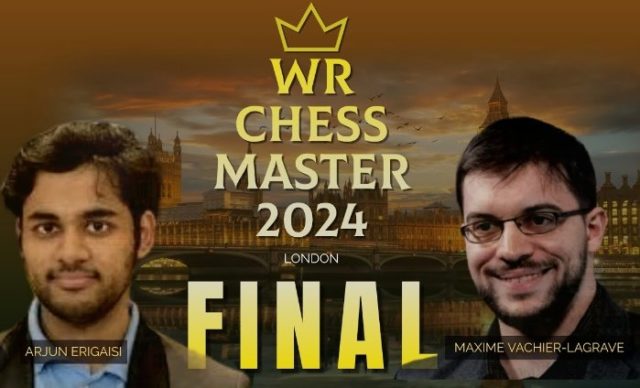
Finale Erigaisi-Mvl.
Final Erigaisi-Mvl.

So all that remained was a final Armageddon game to decide who would clinch the tournament…

I had no idea what he was going to play exactly, but I didn’t think it would be the Petroff! I did have an idea in the variation he chose though, except I handled it badly.
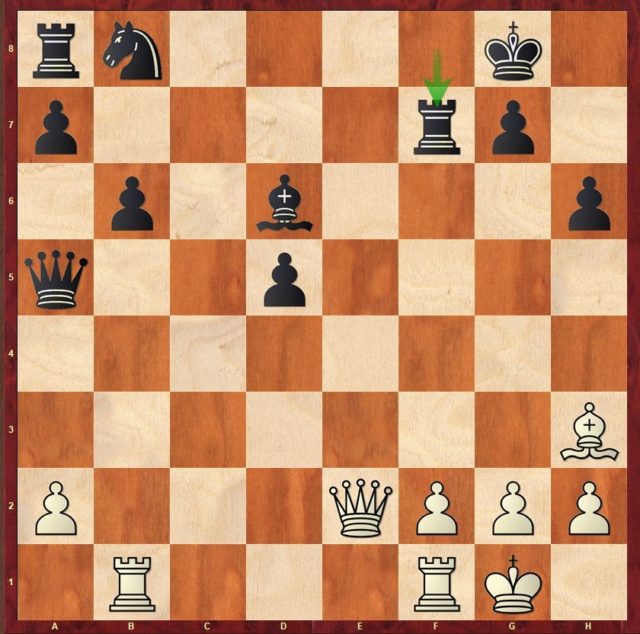

I played 22.Be6? too quickly. I should have started with 22.Rb5 Qa3 23.Rxd5, because after 22…Nc6, if 23.Rb5? now there’s 23…Nd4 24.Bxf7+ Kf8! (the move I missed). During the game, I thought that 24…Kh8? was winning for black, but no! 25.Qe8+! Rxe8 26.Rxa5 +-. So I was forced to take on f7, and after 23.Bxf7+ Kxf7, to play 24.Rb5. And now, admittedly there’s only one move for black, but it’s not very hard to find as you have to protect the Nc6, so it’s 24…Qc3. After 25.Qh5+ Kf8 26.Rxd5 Rd8 27.Rfd1 Ne7, black has two pieces for the Rook, has consolidated his position and my attack is moribund. I noticed when I played 28.Rb5? that 28.R5d2 would have set the trap 28…Bxh2+? 29.Qxh2 Rxd2 30.Qf4+. But I saw it half a second too late, even though I’d taken quite a bit of time on this move; in fact, 12 seconds, which in Armageddon is an eternity 😊.

I still managed to find resources later in the game.
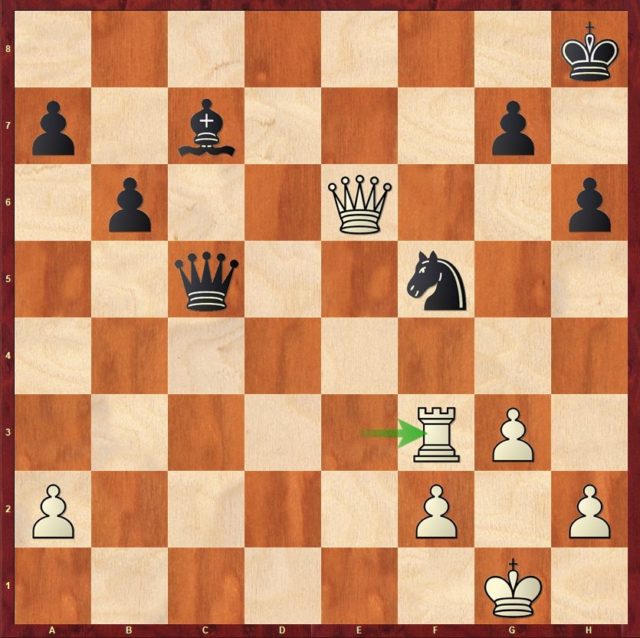

I started to regain confidence here, because if 35…Nd4? 36.Qe8+ Kh7 37.Rf8 Qc1+ 38.Kg2 Qc6+ 39.Qxc6 Nxc6 40.Rc8 wins. I felt he saw it in time, panicked and came back with 35…Ne7. Bad news for him, the position is equal again, good news it’s « only » equal and I’m obliged to win with white! 36.Rf8+ Kh7 37.Qe4+ Ng6 38.Re8 Be5 39.Re6 Bf6 40.h4 Qd4 41.Qf5 Qc5. But I didn’t see my last possibility to try something by playing 42.Qxc5 bxc5 43.Ra6, even though I’m not very optimistic about my objective chances in this endgame. But with less than 2 minutes on the clock, it wouldn’t have been so easy in practice for black.

In the game, I tried to force events by keeping the Queens on with 42.Qb1, but I even ended up losing this game!

Congratulations to Arjun Erigaisi on his final victory in the tournament, which follows on from his Olympic title with India; based on what he’s produced over the past year, he deserves these awards!

Maxime’s games in the Global Chess League:

Maxime’s games in the WR Chess Master:

For all chess players who, like a certain A Karpov, have a soft spot for philately, there are 10 stamps bearing the effigy of Maxime, all issued between 2012 and 2019, and all from African countries!

From Togo to the Maldives, from Guinea-Bissau to the Central African Republic, from Niger to Guinea, all the way to the small island of Sao Tomé-et-Principe, you’ll find special Chess issues as part of collections on sport or other more original themes in which the Royal game is included.
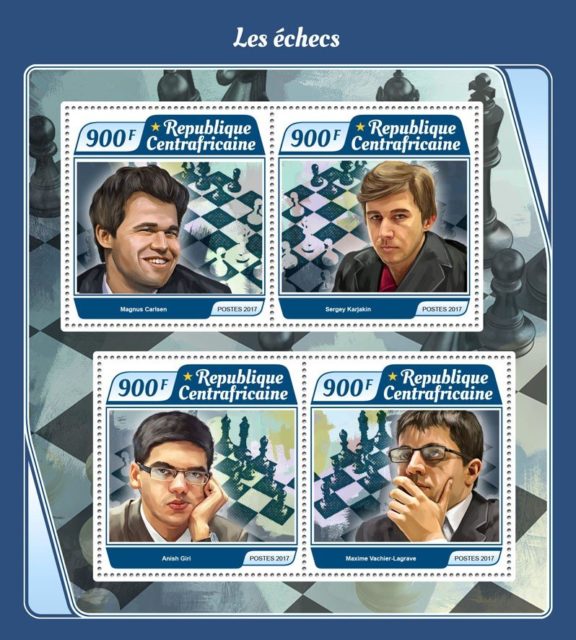
2017 Central African Republic stamps.

A story of glasses and a bit of chess

Une histoire de lunettes et un peu d'échecs

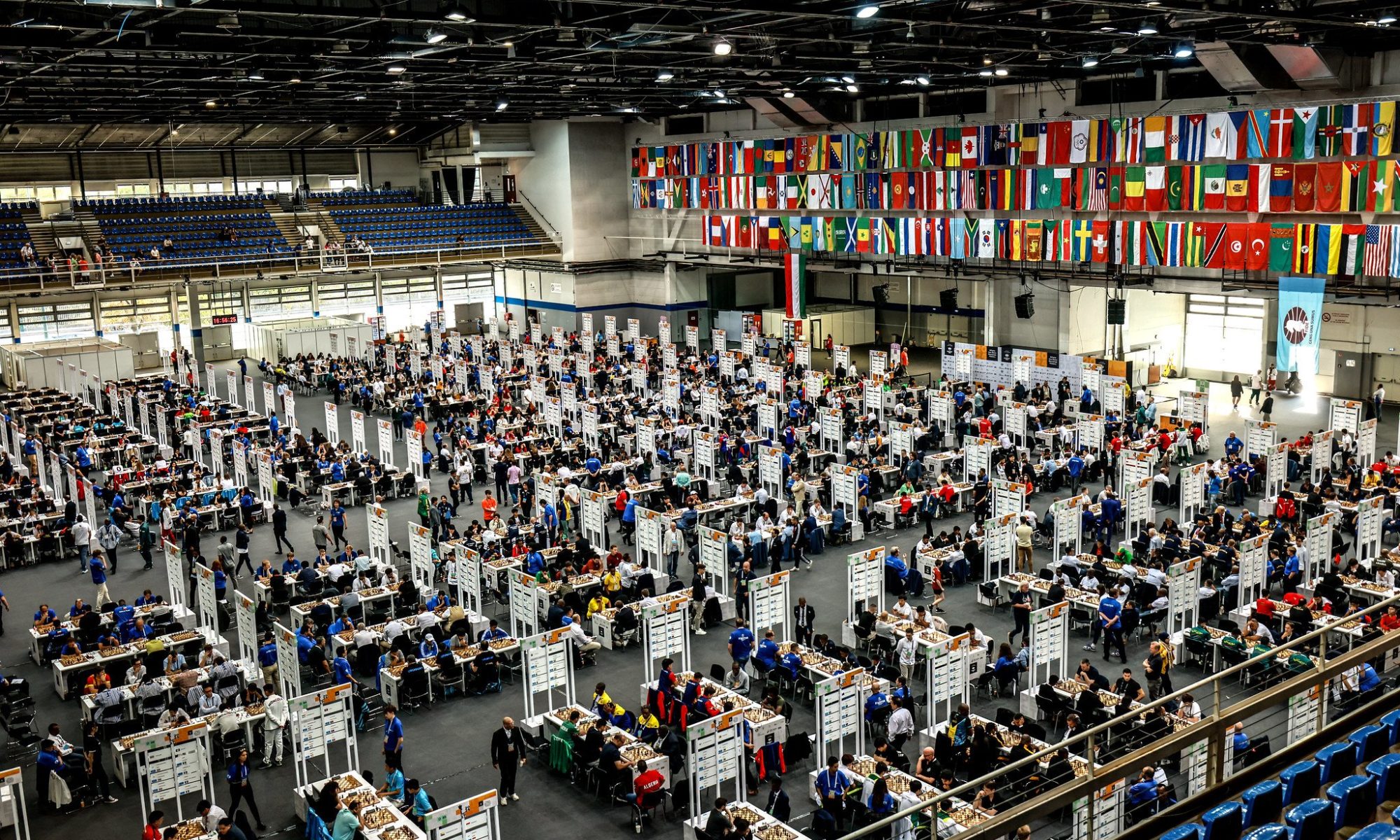
Although I had relatively little rest on my return from the US tour, I was delighted at the prospect of being back with the French team and my team-mates, especially as I’d missed out on the 2022 Olympiad in Chennai (India). It’s a pity Alireza wasn’t there, because we could have lined up a great team against the armadas that were announced…

After a few unavoidable adventures during the team’s journey and installation, we quickly settled into Budapest, with our HQ in a restaurant at lunchtime, and a general routine before and after matches.

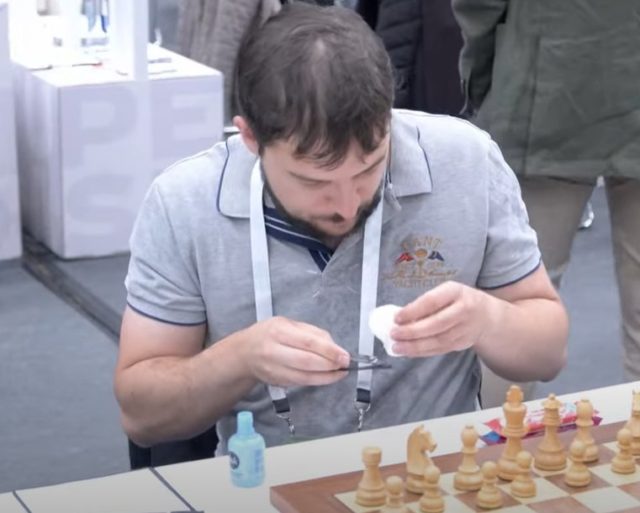
Tentative de rafistolage des lunettes ! (Image : Ffe).
Attempting to patch up the glasses! (Image: Ffe).

As early as my second game (Round 3 against Kadric, Montenegro), I had a problem with my glasses which really upset me. I found them with a broken temple in the morning (don’t ask me why!). The team captain, Sébastien Mazé, and I decided to have them repaired and set off on a tour of opticians in the Hungarian capital. Of course, I would have preferred to prepare for my game, but I can’t possibly function in everyday life without glasses 😊. Unfortunately, all the professionals we visited told us they would need at least 4 days. The problem was, I did have a spare pair, but they were sunglasses! (Spoiler, the Fide rules forbid wearing them during games). So we got smart and tried to fix them ourselves, using super glue. Ah, sure, this glue is super effective, but unfortunately not enough to glue the arm back, but enough to stain the glass! Which only made things worse, as so often in these cases. So my solution throughout the tournament was to keep the glasses without temples straight during the games, and to wear the sunglasses the rest of the time. Even when it was raining or dark in Budapest, you could spot a funny-looking guy in sunglasses 😊.

Admittedly, I got used to it, and during the games, it didn’t bother me that much. It didn’t interfere with my field of vision, the lenses were well placed, and the natural position of the glasses remained more or less stable. I just needed to readjust them regularly, and be a little careful that they didn’t fall off.

Petit selfie nocturne en lunettes de soleil…
A nocturnal selfie in sunglasses… (Image: Ffe).

After this optical interlude, let’s get back to chess! As far as the team is concerned, while I quickly drew my game on the « glasses day », we lost that match against Montenegro. But we were back on track afterwards, and ended up in ambush before the rest day. We followed up in Round 7 against Georgia, a tricky match against players who aren’t highly ranked, but who are quite experienced; admittedly, it’s a rather aging team, despite the contribution of a new kid on the block (Kacharava), but who wasn’t playing against us.

I played a nice game, but we were still held to a 2-2 draw.

Mvl – Mchedlishvili (2574) 1-0


I had spotted that after 1.c4, the Georgian player had varied a lot during the tournament, and that he looked rather indecisive. During the rest day, I decided to take a closer look, especially after seeing that he sometimes played a Slav variation that he didn’t seem to know much about. What’s more, I’d already tried this line with black in the 2020-2021 online tournaments. I’d worked on it quite a bit and knew it was dangerous, especially after the pawn sacrifice in the following position:


Despite this good basis, I messed up a bit because I remembered 15…Nxd5 as the main move, and if 15…exd5 I had 16.Bc1 Qb6! in my memory. So I knew that 16…Nb6?!
was no good, but I didn’t know why! After 17.g4 b4, I didn’t think at all about 18.Na4! a very difficult move that was the real refutation. Indeed, after 18.Nxd5 Nfxd5 19.e4 Nc3+ 20.bxc3 Qc8, I played 21.cxb4? a little out of spite because I felt I hadn’t optimized. I had envisaged 21.h4, which was the move to take the advantage by dissuading black from castling, but I didn’t believe in it. As the game progressed, while he had compensation for the two sacrificed pawns, he let me gradually consolidate my position.

From then on, I played very well. There was some semblance of an attack for Black, but not enough… 28.Qb3! (on its way to c3, from where the Queen will control just about everything) 28…Qf4 29.Qc3 Rac8 30.Bd1! Rc7 31.Bb3 (a rather neat Bishop maneuver; the Fb3 is ideally placed for defense, but it also leans towards f7, which will pay off later) 31…Rdc8 32.Qd4! Qxf3 33.Rhe1 and of course I’ve returned the pawns, but my pieces are now ideally coordinated to conclude.

Unfortunately, we didn’t win the match, even though it was completely under control. So we were punished straight away as we were paired against the USA and its five players at 2700+ in the next round, whereas if we had won, we’d have been playing Hungary…


For my part, I’ve already played the 4 main members of the US team at least twenty times each, if not many more for some because Levon (Aronian) and Fabiano (Caruana), I think (counting all the cadences), it would be more between 150 and 200 times!

Caruana (2798) – Mvl 1/2


On the first board, I was black against Fabiano, and we quickly arrived at the next position, which came from the 3.Bb5+ variation against the Sicilian.

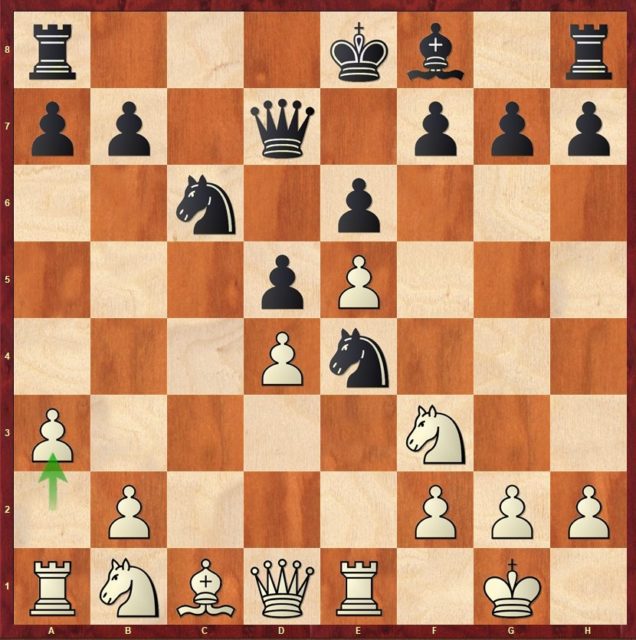
I had looked at this 11.a3 move a long time ago, probably more than 3 years. But during the training camp with the French team in Vichy, just before the Olympiad, we had discussed this idea for a few minutes, though I couldn’t remember the details ; so I improvised 
😊. What’s more, in the match strategy, as we’d decided that Etienne (Bacrot) would play hyper solid chess with white against Wesley (So), the idea was obviously that for me, a draw would be a very good result with black; but that nevertheless, if I could avoid neutralizing everything and keep a few options open, it wouldn’t be any worse.

La 167e partie enregistrée entre les deux joueurs ! (Photo : Fide).
The 167th recorded game between the two players! (Photo: Fide).

So I played with that in mind, trying not to find myself slightly worse, defending a position with no perspective, but rather keeping a few opportunities for counterplay.

A critical moment because here Fabiano let me play 19…Qc2,calculating that he could take advantage of the trapped Rook on c2, but that wasn’t the case! After 20.Qxc2 Rxc2 21.Bc3 Nc6, he played 22.Red1. His basic idea was 22.Rb1, but there’s 22…Re2! (the computer says 22…Bg5 is ok too, but that leaves 23.Rdd1, or even 23.Nxg5 hxg5 24.Bd2, which, by the way, I thought he would play) 23.Nd2 (to play 25.Kf1; if 23.Kf1 at once, then 23…Re4 24.Nh2 f6, my Rook lands on f4, and even if it’s a bit acrobatic, it’ll come out!) 23…Bh4 and if 24.Rf3? Nxd4.

With the Rook on d1, I played 22…Bg5 since 22…Re2? no longer works due to 23.Nd2 Bh4 24.Nf3 and taking on d4 is no longer possible, the Cd2 being protected.

After 23.Ne1 Rc1 24.Rxc1 Fxc1, despite its apparent symmetry, this endgame isn’t completely straightforward because black is still short of space and, if white manages to play f4-f5, it can quickly become complicated on the Kingside. However, I managed this situation quite well and even got a few small chances around move 40 when he was running out of time; but he defended very well and everything simplified towards the draw.

In the end, we lost the match because Maxime (Lagarde) blundered in a rather promising position against Levon, and our opponents secured the rest of the match.

Against Italy, I played an insipid game and was totally neutralized by Vocaturo with white, but we ended up winning a match that had started quite badly. After that, we got things under control against England (I won against Vitiugov), and we went into the final round against the young reigning champions from Uzbekistan, with at least a fifth place at stake.

Unfortunately, we ended up losing this match, though we had a great opportunity because once again it was Maxime (Lagarde), in time trouble, who lost a very promising position. We can also regret Étienne’s draw, more or less without playing with white against Yakubboev, because while against So, we had collectively agreed that it was the right strategic choice, there, for a last round, we would have preferred him to play…

As for me, I was black against Abdusattorov, and it was a morning game where, out of necessity, the revisions are less thorough.

Abdussatorov (2766) – Mvl 1/2


Here’s the position we got after 20 moves of a very complex Najdorf.

For the record, Vladimir Kramnik, who was the captain of the Uzbekistan team, said to me right after the game, with his legendary optimism 😊: « but you were completely lost had Nordibek played this… ». On the spot, I thought he was telling me that I was completely winning, because later in the game, it did look more promising for me. But even so, I didn’t understand where I would have been winning either! I finally understood he was referring to the diagrammed position, arguing that if white had played 21.Nxe6 fxe6 22.Qd3 (instead of 21.Qd3 right away, allowing 21…Bd7!) « [Nordibek’s position] would have been winning ».

He’s not entirely wrong, in the sense that I’m actually worse in this variation, but certainly far from losing! It’s a tricky position to be in, but it doesn’t look that bad and, above all, it leaves plenty of play for both sides.

In the end, I managed the rest of the game rather well, and got quite a bit of play afrer sacrificing a pawn ; but it wasn’t enough to win.

Trois français (Fressinet, Maurizzi, Bacrot), mains sur la bouche ! (Photo : Fide).
Three Frenchmen (Fressinet, Maurizzi, Bacrot), hands over their mouths! (Photo: Fide).

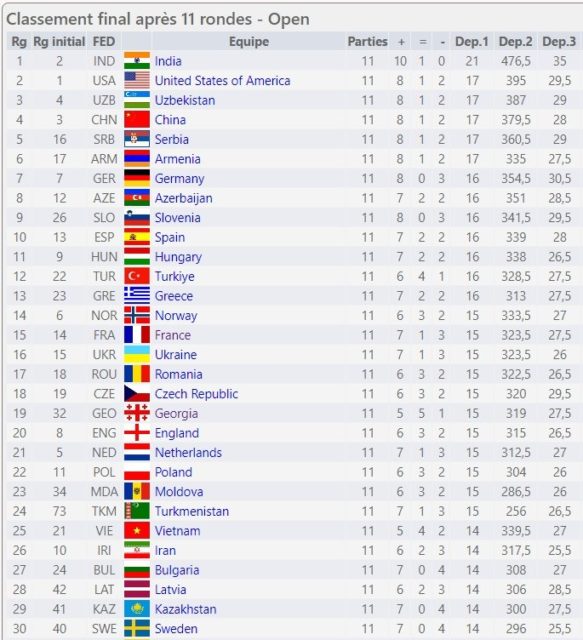
In terms of final results, the Olympiad was rather disappointing, as we finished in 15th place. As we didn’t have one of the best line-ups, everyone would have had to outperform to keep any hope of a podium. But it’s clear that no-one in the French team was in exceptional form. There were certainly some good things. Laurent (Fressinet) at the end, Marc’Andria (Maurizzi) over a large part of the tournament (apart from his defeat against England, which was a bit damaging); for his part, Maxime (Lagarde) set the tournament alight, even if it backfired in the two matches we lost at the end. But in other circumstances, it could have been a very good tournament, and in any case, he’s in the right frame of mind.

On a personal level, 7/10 is good, but not prodigious either. In fact, it’s a result that suffers from comparison with other first board players, such as Gukesh or Abdusattorov, who achieved stratospheric performances in Budapest!

Incidentally, I’d like to take this opportunity to salute the Indians’ double gold medal, which really is beyond dispute…

Top 30 at the Olympiad (Image: www.chess-results.com).

Champions Chess Tour

Three days after returning from Budapest, I took part in the final tournament of the Champions Chess Tour, in Division 1. Having already qualified as one of the Top 8 players on the circuit who will compete in the face-to-face finals in Oslo from December 17 to 21, my main concern was to play good chess, at a rhythm of play I like (10+2). The result was mixed, as I won my matches against Nepo and Grischuk, but lost twice to Aronian, finishing in fourth place in the final rankings. But what I’ll remember most is that this is the second tournament in a row on this circuit where I’ve been awarded the beauty prize! This time, for my mating attack against Nepo…

Mvl-Nepo, Champions Chess Tour - Julius Baer Generation Cup
Mvl-Nepo, Champions Chess Tour – Julius Baer Generation Cup

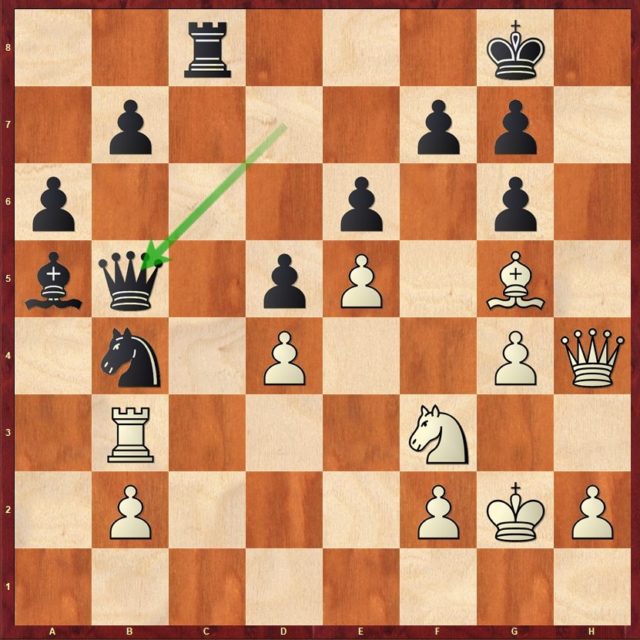
Here, my Rook is under attack, but a retreat move like 29.Re2 would leave white with almost no advantage. I spent quite a bit of time (2 minutes) on 29.Ng5! because, even though it’s a fairly obvious move, I wanted to check that I hadn’t forgotten any defense. Of course, if 29…fxe6 30.Qxg6 wins instantly. If 29…Be7, the answer is easy, 30.Nxf7. I had also calculated 29…Re7 30.Qg3, although in that one you’d still have to find the punishment for 30…f6, namely 31.Bxf6! gxf6 32.Rxf6 and if white’s attack isn’t instantly winning, it’ll still be devastating. That leaves 29…Rd6. I’d planned 30.Qf3 as the simplest answer ; he still can’t take on e6, and if 30…Qd7, I’ve got 31.Rxd6 Bxd6 32.Qxd5. As for 30…Qxe6, it leaves black no chance of fortress at all. But since I also saw 30.Qg3, I didn’t hesitate to calculate it! If 30…fxe6 31.Qh4 is mate. Ditto after 30…Qxe6 31.Qh4. So it wasn’t so hard to understand that after 30…Qd8, 31.Re8! was so strong. It looks spectacular, but honestly, it’s extremely easy…31…Qxe8 32.Qh4 Qe4+ and now,33.Kg3!, the icing on the cake! I could have played 33.Kg1 or even 31.f3, but I chose the more aesthetic; I use the fact that the Rd6 blocks the Bishop’s check on d6!

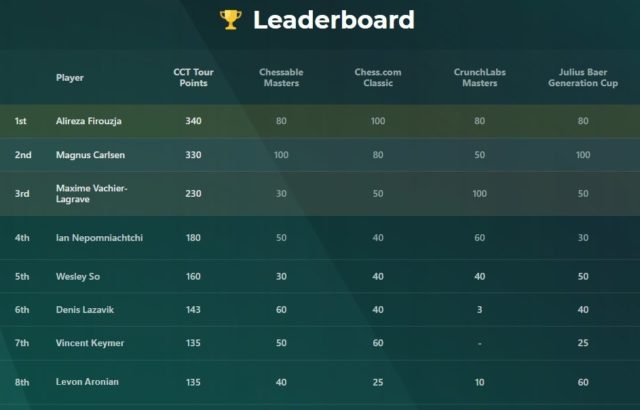
Les 8 qualifiés du CCT pour la finale d’Oslo (Image : www.chess.com).
The 8-player field for the Oslo final (Image: www.chess.com).

As an anecdote, while I was playing, I thought of my 2011 game against Wang Hao (in Wijk aan zee), not at all featuring this opening but where I had this same attacking theme.

Mvl-Wang Hao, Wijk aan zee 2011

In this completely winning position, I’m spoilt for choice. 32.Nd2 followed by 33.Rh3 does the job, as does the aesthetic 32.Bf6, followed by 33.Ng5. But I chose 32.Be7? thinking that the threat of 33.Ng5 would force resignation, since if 32…Nd3 33.Rxd3 (33.Ng5?? Nf4+ 35.Kg3 Qxb3+ and if 36.Kxf4? Bd2#); but now black has a defense arising from nowhere, 33…g5!! and if 34.Nxg5? Qxd3 controls h7. Miraculously, white would still stay alive with 34.Rc3! gxh4 35.Rxc8+ Kh7 36.Bxh4, but in the game, I preferred to absorb the shock with 33.Rxb5 Nf4+ 34.Kg3 (34.Rh1 Rc1+ 35.Ng1 Ne2 would have been playing with fire!) 34…Ne2+ 35.Kh3 Nf4+ and perpetual.

My next stop is London. I’ll be taking part in two tournaments in a row: the Global Chess League from October 3 to 12, a team tournament with 20′ games and no increment! Then the WR Masters from October 14, which will feature a new and original formula. A bracket of 16 players with a KO system, and the fastest rate of play to be homologated as classic (1h/30, 30’/20 + 30′ ko). The icing on the cake is that both games of a match will take place on the same day, with a possible Armaggedon tie-break in the evening! A particularly busy program awaits us 😊.

Budapest’s games:

Champions Chess Tour games:

Maxime’s game against Wang Hao:


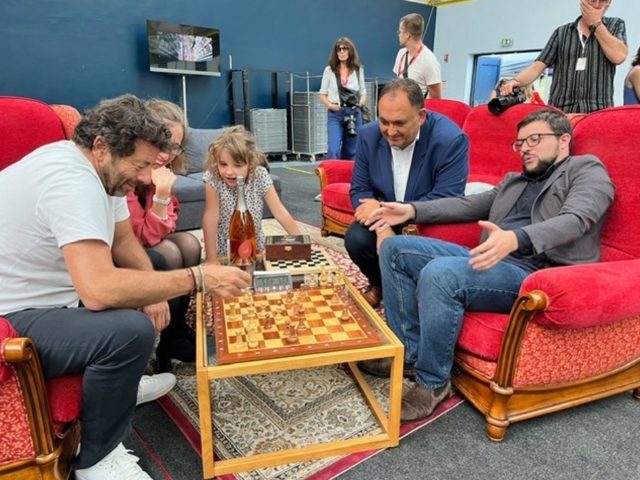
Every year in early September, the huge « Foire de Châlons-en-Champagne » is the place to be. A must-see for the country’s leading political figures, it’s also a place for conviviality and festivities, with concerts every evening. The closing concert on Sunday September 8 featured Patrick Bruel, one of France’s best-known singers and actors. L’Echiquier Chalonnais, which is very active in the Grand Est region and headed by former French Federation President Diego Salazar, invited the singer, as a good chess fan, to play a friendly game against Maxime. A similar initiative took place with Garry Kasparov in 2013. The game took place backstage just before the concert. Despite the help of French GM Marie Sebag, Patrick Bruel bowed out with a smile, before heading off to perform in front of the 18,000 or so spectators who were waiting for him!

Patrick Bruel, Marie Sebag, sa fille, Diego Salazar et Mvl (de g. à d.).
Patrick Bruel, Marie Sebag, her daughter, Diego Salazar and Mvl (l. to r.).
Top