
BUCHAREST
For me, the start of the Grand Chess Tour 2023 in Bucharest meant a return to classical chess tournaments, after a long hiatus since the Sinquefield Cup in September 2022 and the installation of my new staff immediately afterwards.
The draw designated me as the first opponent of the new world champion, Ding Liren! Tired from his match, the Chinese didn’t try much with white and I easily drew.
In my four white games, I produced a few good ideas, notably in the Scotch against Giri and against Rapport’s Winawer, although in the end both were drawn. On the other hand, I was effectively neutralized by So and Deac in the London and the Italian. So the balance sheet with white is relatively mixed, although I did test a few new weapons.
With black, I also scored 50% (+1, -1, =3) which is rather satisfying, even if I was clearly dominated in the opening of both decisive games, against Caruana and Nepo, which I will come back to here:
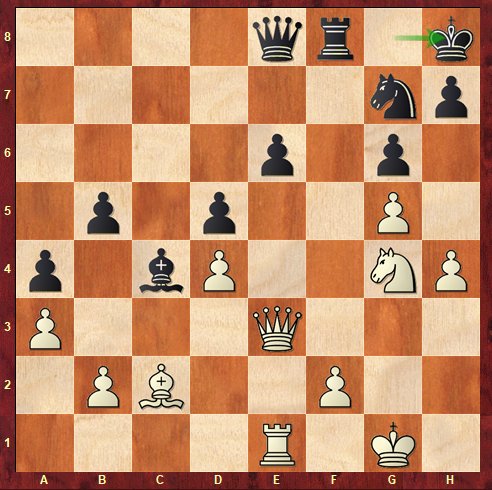
ROUND 3: CARUANA – MVL 1-0
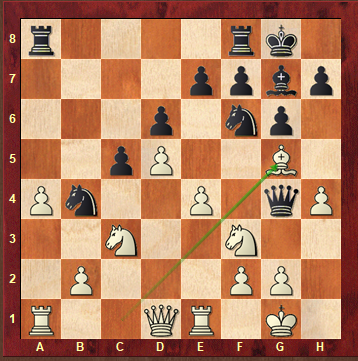
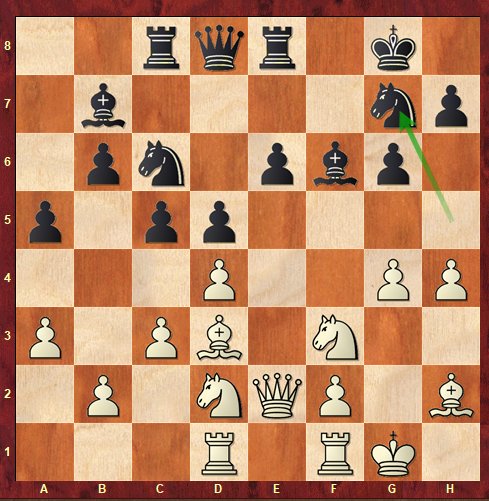
I played 15…Nh5? not because I’d forgotten that the e7 pawn was hanging, as some have written, but because after 16.Bxe7 Nf4 17.g3 Nbd3, white had the fearsome 18.Ng5! Qxd1 19.Raxd1 which I had overlooked, and no tactical continuation really works for black. So I fell back on 17…Rfe8 18.Bxd6 Nfd3 but after 19.Re3 Nxb2 20.Qb3! N2d3 21.e5! I could never justify the material deficit.
ROUND 5 : NEPO – MVL 0-1
A game that got off to a bad start, as Ian used the Alapin to get a Queenless middlegame that looked harmless, but isn’t: surely the product of very good preparation for his World Championship match. Doubtless perturbed by his loss the day before against Caruana, Ian continued in his style, playing intuitive moves very quickly, and he did indeed manage to cause me some serious problems. But it was once he had me almost on the ropes that he began to falter…
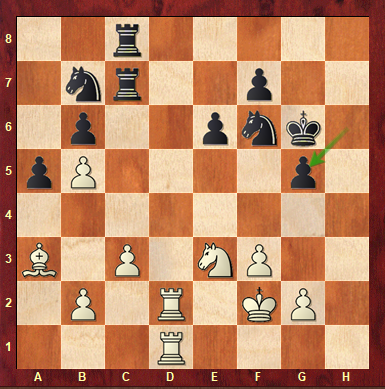
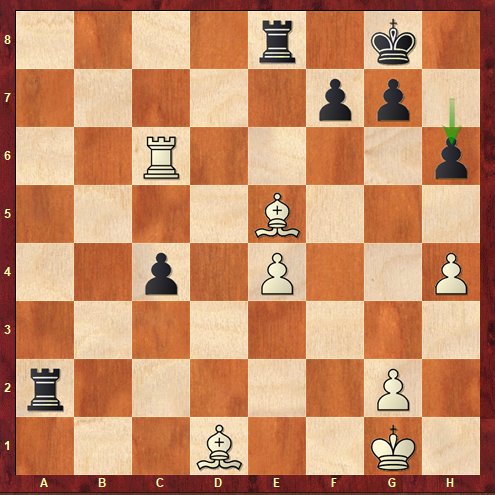
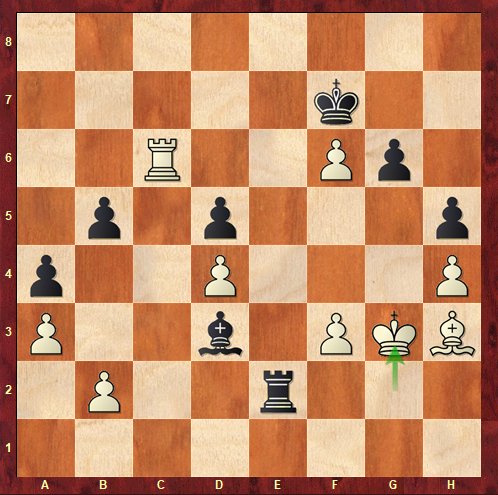
White is in total control, but still needs to find a way forward. I think 32.Rd4! was the most natural, preventing any counterplay and leaving the passage to b3 for white’s King, which will bring new opportunities. But by continuing to play fast to put pressure on the clock, Ian chose the imprecise 32.g4? Rh8 33.Kg3 Rcc8! and let me back in. He continued in this vein and forgot important details, particularly 34.c4 Rh7 35.Bd6 Nd7! At this point, I realized that it could start to get very tricky for him if I doubled on the h-file and played …f6 and then …Ne5, forcing Bxe5 fxe5, after which my other Knight would relive on c5. And that’s what happened in the game! Even if I wasn’t completely sure to be winning after move 40, I knew that my position had become quite easy to play, and really hard for him to defend!
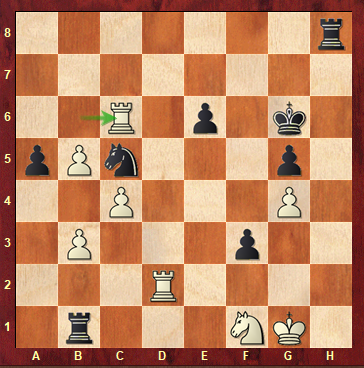
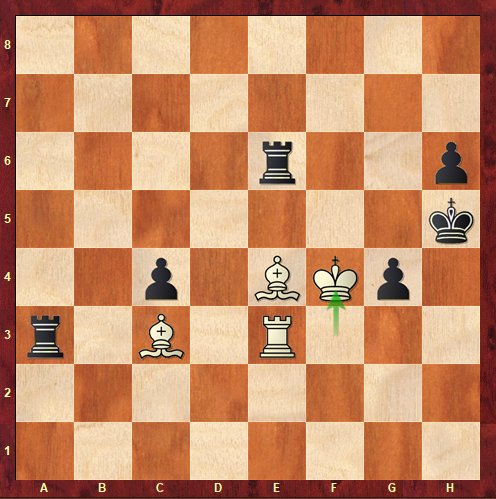
The final combination: 48…Rxf1+! (you had to calculate this line correctly because it’s the only move that wins) 49.Kxf1 Rh1+ 50.Kf2 Ne4+ 51.Kxf3 Nxd2+ 52.Ke3 Nxb3 53.b6 Rh3+! 54.Kf2 (54.Ke4 Kf6! 55.b7 Nd2+ 56.Kd4 Rb3 -+) 54…Rh8 with a trivial win.
A somewhat unexpected victory, but one that boosted my morale ahead of the rest day.
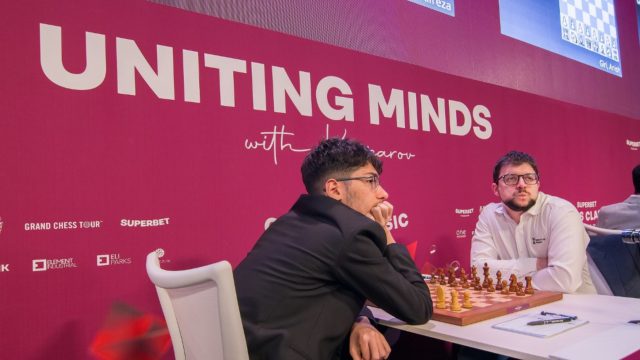
I can’t ignore my game against Rapport that followed the rest day, because it was really quite spectacular!
ROUND 6: MVL – RAPPORT ½
It was a typical French Winawer where Black closed the center with …c4. I thought I was in control and had quite a few possibilities on the Kingside, but it wasn’t at all that clear. I have to admit that Richard is an expert in this type of structure in the French, and he knew how to find the right piece arrangements.
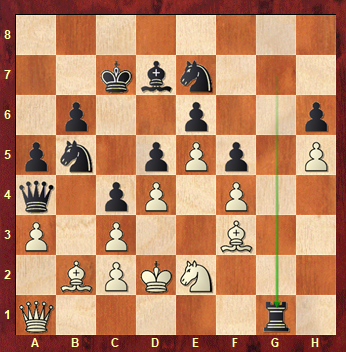
My basic plan was to bring my Knight back to the ideal e3 square, before invading the Kingside with Qg1-g7; that’s why I took back on g1 with the Knight.
In fact, the more natural 33.Qxg1 led to crazy complications, but didn’t change the evaluation: 33…Nxa3 34.Bxa3 Qxa3 35.Qg7 b5; here, the immediate and natural 36.Qxh6 had the advantage of forcing Black to find a difficult « only move » after 36…b4 37.Qg7 [37.Qf8 gave White the opportunity to lose after the amusing 37…b3 38.h6? b2 39.h7 Ng6! 40.Qxa3 b1=N+] 37…b3 38.h6 b2 39.h7 b1=Q 40.h8=Q
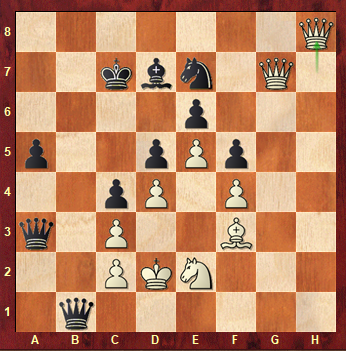
40…Qaa1!; the computer is formal, any other move loses, e.g. 40…Qab2? 41.Qxe7 and despite taking c2 with check, both black Queens can’t even give perpetual, or 40…Qb8? 41.Qxb8+ Kxb8 42.Qf8+ and black will never move again the Knight, nor the Queen! Instead of 36.Qxh6, white also had the possibility of 36.Ke3!! a rather incredible move, the loss of a tempo being aimed at preventing the push of the fastest b-pawn; after 36…Nc6 37.Qxh6 a4 (but not 37…b4? 38.Qf8! gaining a crucial tempo) 38.Qg7 Qe7 and black seems to hold.
But after 33.Nxg1 Be8 34.Nh3 Kd7 35.Nf2 Bf7, I realized that if 36.Nd1, Black would have covered g7 with 36…Ke8 37.Ne3 Kf8, and if necessary covered f6 in case of 38.Qe1 Nc7! 39.Qh4 Ne8. So I immediately went back to the 36.Qg1 plan, giving a3 against g7, and we arrived at this crazy position, although fairly typical of passed pawn races with heavy pieces:
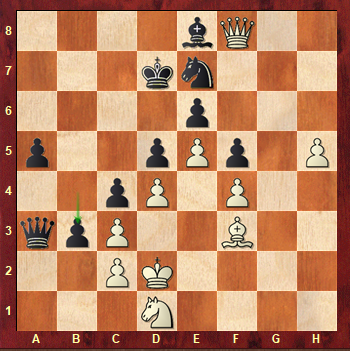
42.cxb3 (42.h6 wasn’t enough either: 42…bxc2 43.Kxc2 Qa2+ 44.Nb2 a4 45.Kc1!? Qa1+ [45…a3? 46.Na4] 46.Kc2 =) 42…Qa2+ (42…cxb3 also worked: 43.Be2 b2 44.Bd3 [especially not 44.Kc2?? Qb3+! 45.Kxb3 b1=Q+ 46.Ka3 a4! -+] 44…Qb3 45.h6 b1=Q 46.Bxb1 Qxb1 47.h7 Bh5 48.Ne3! =) 42…Qa2+ 43.Ke1 Qh2 44.bxc4 Qxf4 45.Be2 Qg3+ 46.Kd2 Qg5+ 47.Ke1 Qg3+ and draw.
In the end, I think we produced a very good game, extremely tense from start to finish.
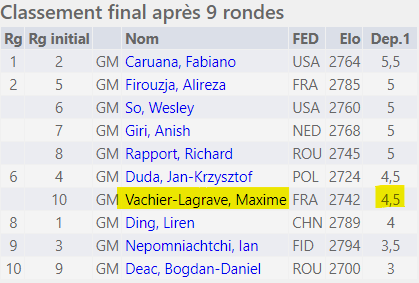
The Bucharest result is mixed, with a 50% score and a lot of draws, but it’s well above what I did in 2022, even if it’s obviously still below some of the standards I had a few years earlier.
In any case, for me it was a sort of « return to business », rather satisfying if you look at it as an Elite tournament in preparation for the major event of the season, which will be the August World Cup in Baku.
WARSAW
Barely 3 days after my return from Bucharest, I was back on the road for the next Grand Chess Tour event in Warsaw.
ROUND 1: MVL – ARONIAN ½
From the outset, a theoretical discussion on one of the most complex lines in the London!
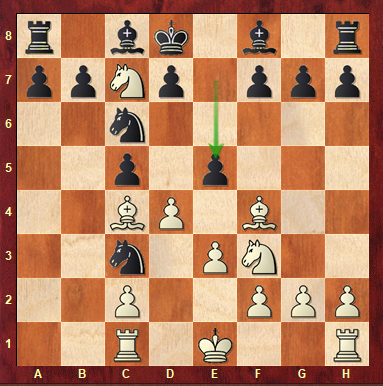
Here I hesitated for a long time between 13.Nxa8 and 13.Nxe5. 13.Nxa8 exf4 14.Ng5 seemed like a complete tactical mess to me, and I went for 13.Nxe5, which I thought was superior. The problem was that I totally missed the King’s journey to b6 by 13…Kxc7! 14.Nxf7+ Kb6 15.Nxh8 d5 and with the King safe and the pieces coming out, Black has the advantage. I thought Lev wanted 13…Nxe5? 14.Bxe5 d6 15.Nxa8 dxe5 16.dxe5 which seemed to work in my favor. In the game, I painfully managed to restore quality and stabilize the position after 16.Bd3 Be6 17.Bxh7 followed by 18.Ng6.
ROUND 4 : CARLSEN – MVL ½
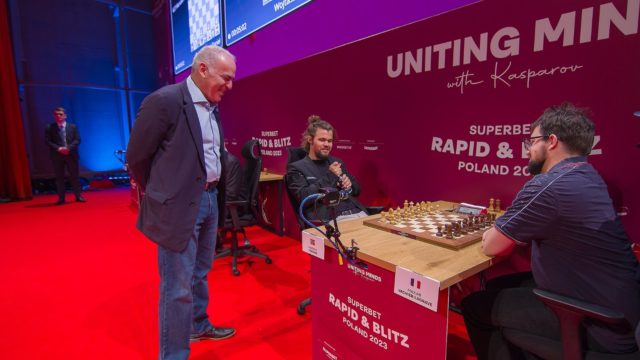
A spectacular game for his endgame. With black, I think I’ve properly handled the trendy new opening employed by World #1, the London. Despite the long maneuvers he’s known for, Carlsen never managed to destabilize my position, until a stupid little miscalculation got me into trouble.
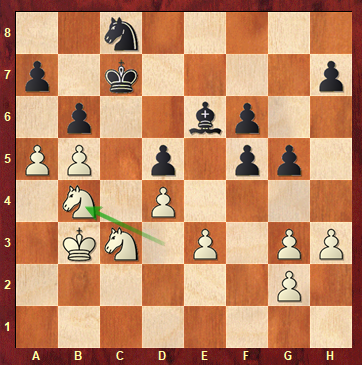
Here, all I had to do was keep waiting with 51…Kd6 and if ever white trades on b6, to recapture with the pawn; white would have had no way of increasing the pressure. Unfortunately, I thought he wouldn’t regain the a5 pawn after 51…bxa5?! 52.Na6+ Kd6 53.Nc5 Nb6, completely forgetting the fork 54.Nb7+ Kc7 55.Nxa5. Even if this doesn’t change the assessment, as the position is still equal, White gains access to the c5-square and makes my defense much more difficult.
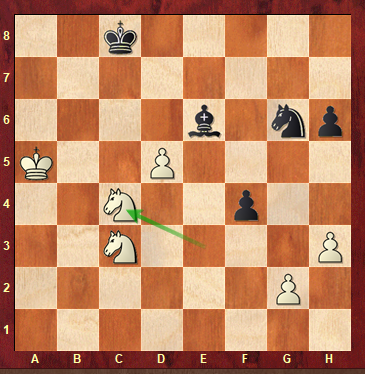
A few moves later, I decided to force events with 70…f3!? (the machine indicates that 70…Bd7 is also completely equal, but this was impossible to guess on the board) 71.dxe6 fxg2 72.Ne2 Kd8. I’d anticipated that we’d end up in the famous 2 Knights vs. pawn endgame, in a version most likely winning for white, but probably not in less than 50 moves! What’s more, I knew the extreme complexity of the Knight maneuvers in this endgame, and felt that even for Carlsen, the task would be impossible to achieve in practice 😊. I’d like to take this opportunity to give a nod to the great French endgame specialist IM Alain Villeneuve, who was my theoretical reference for this ending, as for many others!
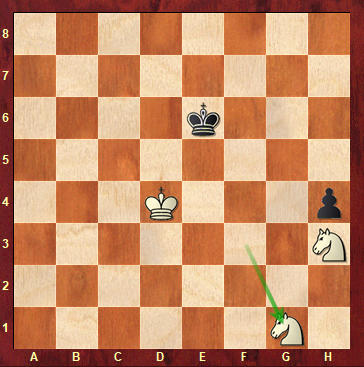
It was Troitzki who cleared up the whole theory of this endgame, and as early as 1906, he laid down the following rule: all positions with a Rook pawn blocked on the fourth rank by an unmoveable Knight are won, whatever the position of the black’s King. This is the case here, even if the tablebases indicate that it takes 56 moves on perfect play to force the h-pawn to advance! 80…Kd6 81.Nf3 Ke6 82.Kc5 Kd7 83.Kd5 Kc7 84.Ne5 Kb6?! (84…Kb7! 85.Kc4 Kb8 delayed the game’s zugzwang) 85.Kc4 Kb7 86.Kb5 Kc7 87.Nc4? (postpones the win by about 15 moves because black’s King gets closer to the center! First, he had to be confined to the eighth rank, starting with 87.Kc5! Kb7 88.Nc4 Kc7 89.Nb6 Rb7 90.Nd5 Ka6 91.Kb4 Ka7 92.Ka5 Kb7 93.Kb5 Kc8 [or 93…Ka7 94.Nb4 Kb7 95.Na6 Ka7 96.Nc5] 94.Kc6 Kd8 95.Kd6. After more than 20 further moves interspersed with new esoteric maneuvers 😊, the next ideal position would finally have been reached.
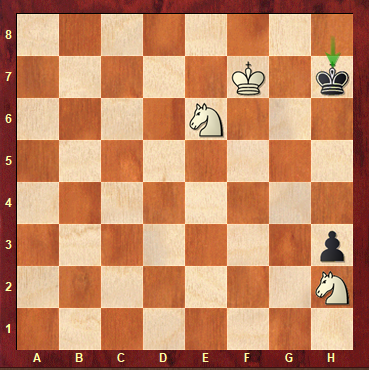
Now it’s time to checkmate! 1.Ng4! Kh8 2.Nf6 h2 3.Nf4 h1=Q 4.Ng6 mate.
In the game, after 87.Nc4? Kd7 88.Kb6 Ke6 89.Kc6 Kf5 90.Ne3+ Ke4 91.Ng2 Ke5, Magnus had to start all over again from scratch, and preferred not to insist by taking the h4 pawn…
ROUND 7: MVL – SO 1-0
A tactical game decided in one key moment:
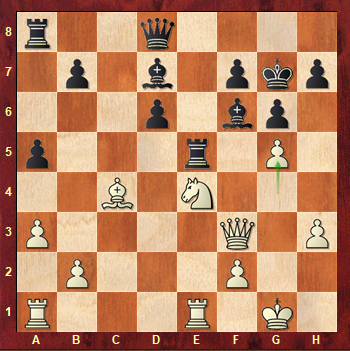
Black has a difficult choice. Taking on g5 with the Bishop and allowing Qxf7+, or sacrifice the exchange on g5. After a 2-minute thought, the piece fell on the wrong side for Wesley, with his erroneous choice to discard 26…Bxg5! 27.Qxf7+ Kh6 (for the anecdote after 27…Kh8, I had calculated a losing variation for me! 28.Nxd6 Bf6 29.Ne8 and I was very proud of what I thought was a forced mate after 29…Bxe8 30.Qg8+ or 29…Qxe8 30.Qxf6+ or 29…Rxe8 30.Rxe8+ followed by 31.Qg8+ or 31.Qxf6+. But 29…Rg5+! is a cold shower! 30.Kh2 [30.Kh1 Bc6+; 30.Kf1 Bxh3+] 30…Qb8+ and it’s White who gets his ass kicked! I think I would have realized it along the way because instead of the « brilliant » 29.Ne8?, the direct 29.Rxe5 Bxe5 30.Qd5! Qg5+ [30…Bxd6 31.Qd4+] 31.Kh1 wins, as does the subtle 29.h4! controlling g5) 28.f4! (28.Nxd6 Bf6 29.Ne4 looks almost winning, but 29…Qe8! 30.Qxf6 Rxe4 with an imminent draw) 28…Rxe4 29.Rxe4 (I guess Wesley missed 29.fxg5+? Qxg5+ with a counter-check!) 29…Bf6 with a better version of the « pawn vs exchange » position than in the game.
Returning to the diagrammed position, Wesley finally chose 26…Rxg5+? 27.Nxg5 Bxg5 28.Qxf7+ Kh6 29.Rad1 Bxh3 30.Be6! Bxe6 31.Rxe6 and the heavy white pieces are too powerful.
ROUND 8: DUDA – MVL 1-0
An interesting theoretical debate in a line that’s becoming trendy against the Queen’s Gambit accepted.
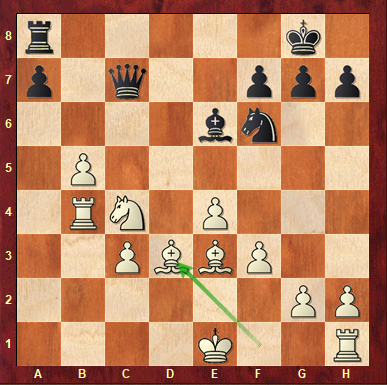
Unfortunately, I didn’t remember my file, which mentioned here 19…Nh5! as the only way to keep a complex position, the idea being that after 20.Kf2 (20.g3? Nxg3! was what I completely overlooked over the board) 20…Nf4, White must play the anti-development move 21.Bf1.
Instead, I opted for the inferior 19…Nd7?! 20.Bd4?! (20.0-0 was more precise, preventing the continuation of the game; 20…a5? 21.Ra1!) 20…a5! 21.bxa6 Rxa6? (missing the point, and yet I’d seen 21…Nc5! 22.Be2 Nxa6 23.Ra4 Rb8 which is unclear) 22.0-0 Ra8 23.Rfb1 and now, the conglomerate of hyper-solid white pieces clearly dominates black’s Queen.
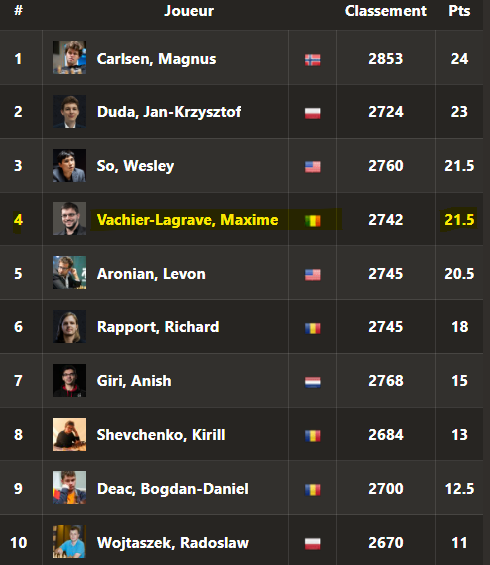
So, in the Warsaw rapids, I achieved a better score than in Bucharest, from 50% to +2. I’m not jumping up and down, but the idea is for my chess to settle in gradually.
In the Blitz portion held over the last two days in Warsaw, I think I’ve produced a fairly uneven result, although I’m quite happy with some games; others have certainly been a little more tricky for me, particularly in the second half of the first day.
In the end, +3 wasn’t quite up to my expectations in terms of result, but it was also my return to blitz, as I hadn’t played since the World Championship in December. And a resumption is always a bit tricky to manage, at least at this level of competition.
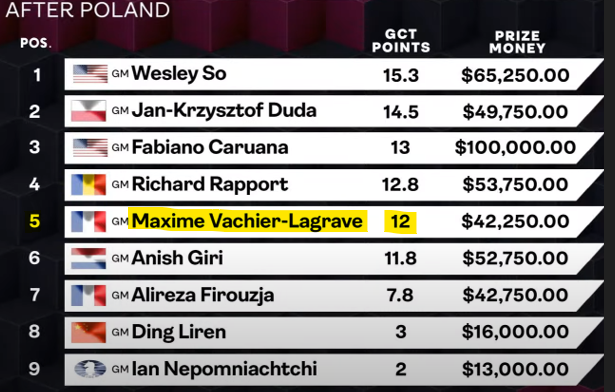
So I’m taking this 50% in Bucharest and this tie for third in Warsaw with philosophy, but I’ll have to perform better in Saint-Louis in November if I’m to have any chance of finishing a sixth year in a row on the Grand Chess Tour podium!
PARTIES MVL
Maxime’s games in Bucharest :
Maxime’s rapid games in Warsaw:
Maxime’s blitz games in Warsaw:
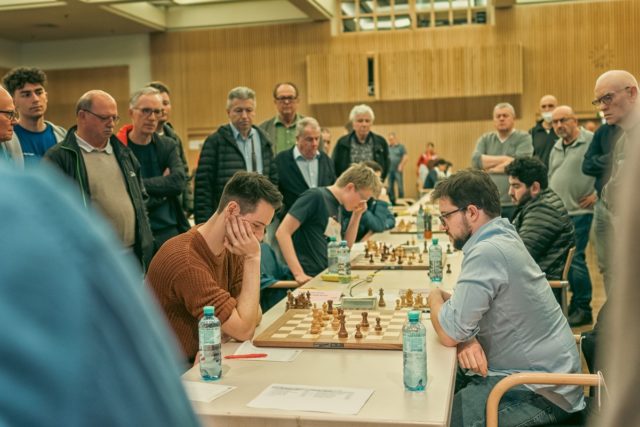
The chess boom is undeniable, even if its proportions vary from one region of the world to another. In France, the famous investigative and reporting magazine « Envoyé Spécial », broadcast on France 2, decided to devote a long section to this boom. As such, it chose to follow Maxime specifically for two weeks. The TV team accompanied him to the French Youth Championships in Agen, where he was invited by the French Federation as an ambassador. They then filmed a day in Paris, between sports training and a visit to his sponsor « Immortal Game ». Finally, the « Envoyé Spécial » reporters also visited Bucharest, for the final rounds of the tournament inaugurating the Grand Chess Tour 2023.
Scheduled for broadcast on a Thursday evening in June on France 2.